Rebonding
Frizzy Hair in Singapore's Humidity: What Actually Works (and What Doesn't)
Jul 29, 2026 · 5 min read
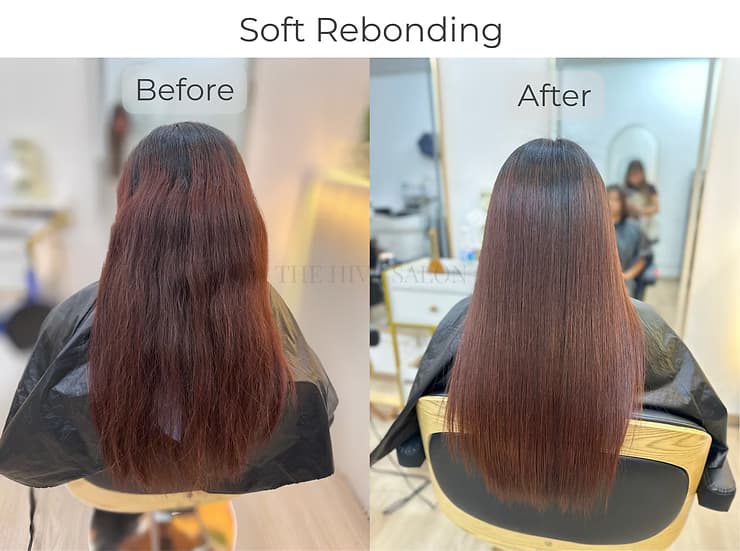
If you've ever stepped out of the house with smooth hair, only to look in the mirror an hour later and find a halo of frizz — you're not doing anything wrong. You live in Singapore, and the weather is working against you.
Here's an honest look at why it happens, and what genuinely helps. Some of it costs nothing. Some of it is a salon service. We'll be straight about which is which.
Why your hair frizzes here, specifically
Singapore sits at about 84% average humidity. That's the real culprit, not your hair.
Hair is porous — it absorbs moisture from the air. When the air is this damp, the outer layer of each strand (the cuticle) swells and lifts as it draws water in. Lifted cuticles are what you see and feel as frizz: rough, puffy, flyaway. The drier or more damaged your hair, the more moisture it drinks in, and the worse the frizz gets.
So frizz isn't really about “messy” hair. It's about how much moisture your hair lets in — and that's something you can actually influence.
What helps — from least to most involved
1. Stop stripping your hair (free)
Most frizz-prone hair is also slightly dry, and harsh shampoo makes it drier. If your shampoo lathers aggressively and leaves your hair squeaky, it's likely stripping the natural oils that keep the cuticle flat.
Switch to a gentler, sulphate-free shampoo and don't wash daily if you can avoid it. This alone settles a surprising amount of frizz, and it costs you nothing but a change of habit. If you're not sure what suits you, our guide on choosing the right shampoo for your scalp type walks through it.
2. Lock moisture in after washing (low cost)
Frizz often happens because hair is thirsty — so give it something to hold onto. A leave-in conditioner or a few drops of hair oil on damp (not soaking) ends helps seal the cuticle before the humidity gets to it. Apply to the mid-lengths and ends, not the scalp.
Avoid touching or brushing dry hair through the day — every disturbance roughs the cuticle up again.
3. A salon treatment for moisture and smoothness (mid)
If home care isn't enough, a hydrating salon treatment can help your hair hold moisture better and sit smoother for a few weeks. This won't permanently straighten anything — it's maintenance, not transformation — but for mild frizz on otherwise healthy hair, it's often all you need.
At our salon we'd usually suggest starting here before anything more involved. There's no point doing a major service if a treatment solves it. If you're weighing the options, our guide to Nanomist, Milbon and Vokanic treatments explains what each one does.
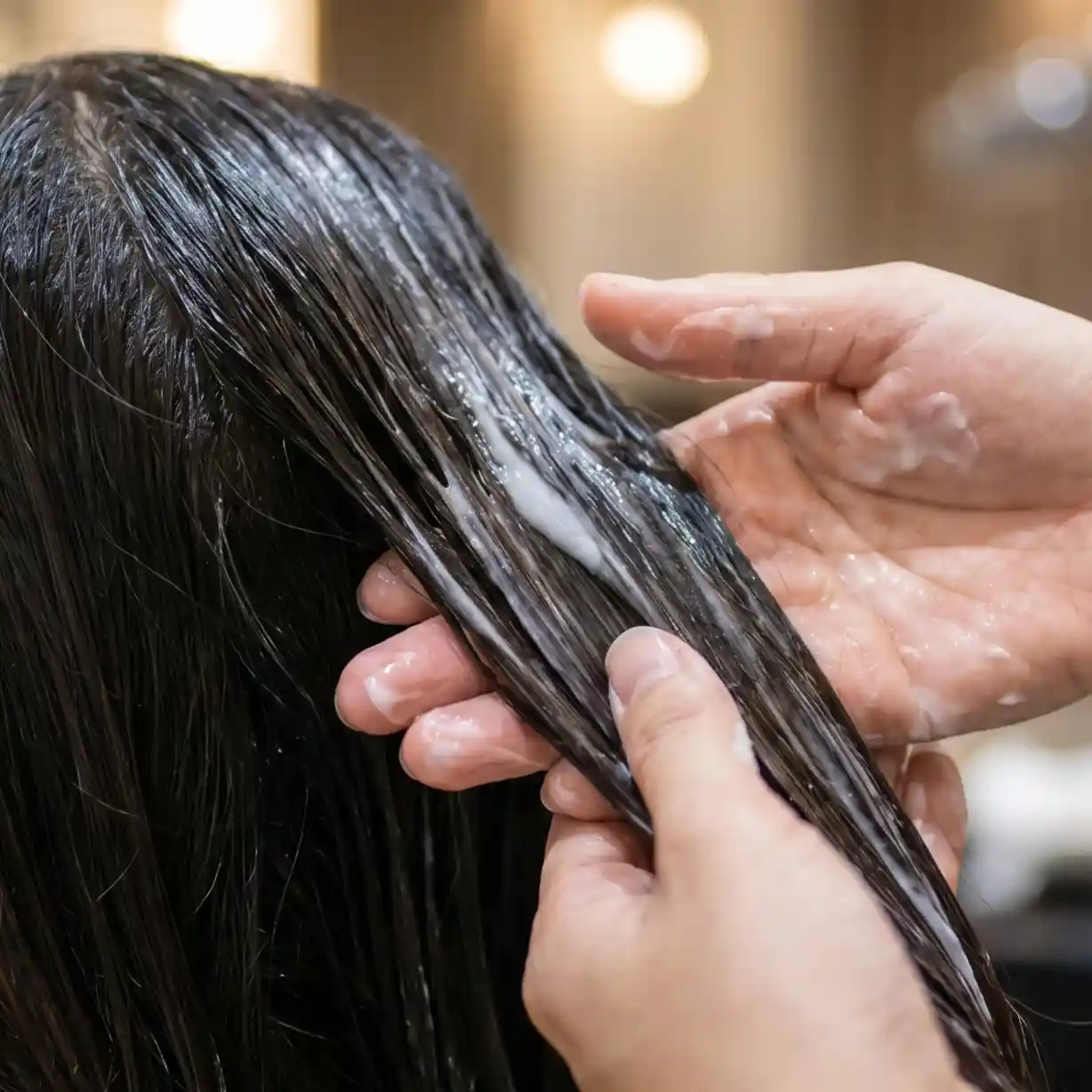
4. Soft rebonding — for frizz that won't quit (the bigger step)
If your frizz is persistent, your hair is naturally wavy or coarse, and you're tired of fighting it every single day, this is where rebonding comes in.
Rebonding chemically restructures the hair so it lies smooth and straight — and crucially, it stays that way in humidity, because the hair's internal structure has changed. Soft rebonding gives a natural, sleek finish without the stiff, flat “board straight” look that older rebonding was known for. It's the option most of our clients with stubborn frizz end up choosing, because it genuinely ends the daily battle. If you're curious how it compares to a fuller-bodied result, see soft rebonding vs volume rebonding.
It's a commitment — both in cost and in time (a few hours) — and it grows out gradually, so it's not for everyone. But for the right hair, it's the difference between managing frizz forever and simply not having it.
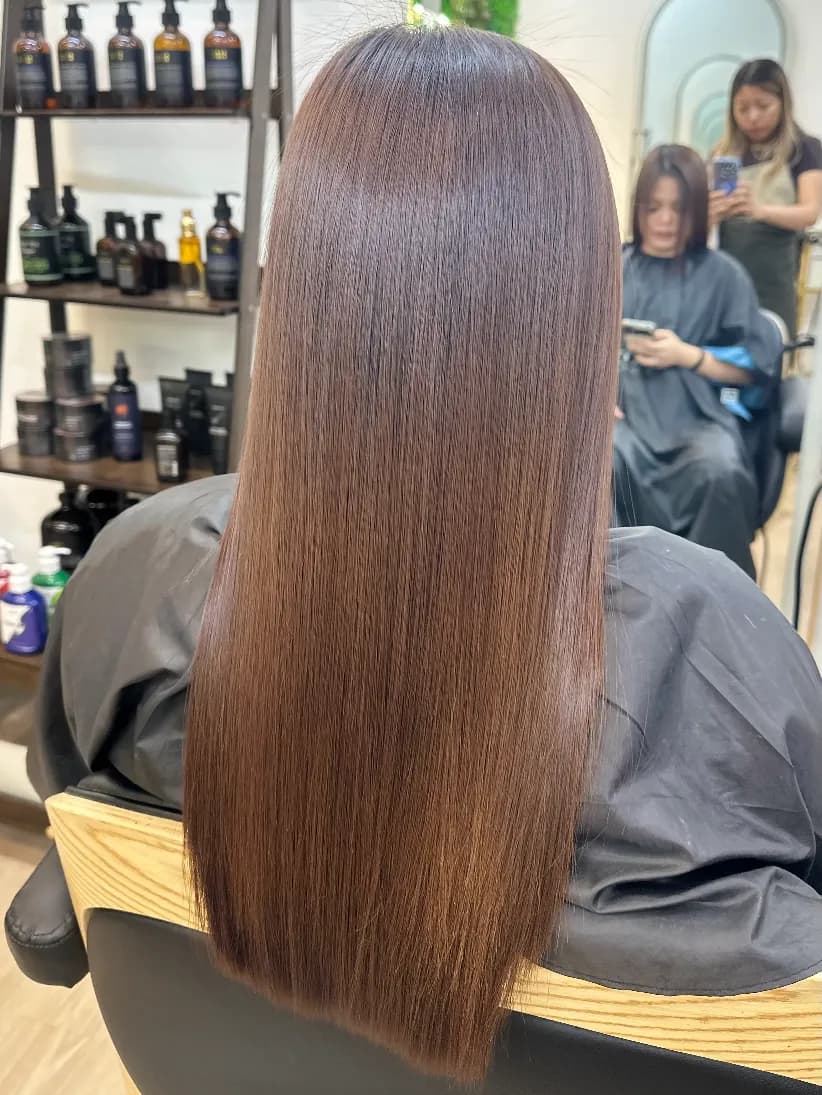
If you're not sure whether your frizz needs a treatment or rebonding, that's exactly what a consultation is for. We'll look at your hair honestly and tell you the smallest thing that'll work — not the most expensive.
What doesn't work (and why)
Plenty of common frizz “fixes” either do nothing or quietly make things worse. The usual culprits:
- Flat-ironing it straight every morning. Daily heat dries the hair out, and drier hair drinks in even more moisture — so you get more frizz tomorrow, not less. You're treating the symptom while feeding the cause.
- Heavy silicone serums. They coat the surface for a glossy hour or two, but they don't hydrate. Once humidity wins, the frizz returns — and the build-up can leave hair limp.
- Washing more often to “clean off” the frizz. Over-washing strips the oils that keep the cuticle flat, which is the opposite of what frizzy hair needs.
- Cheap drugstore “anti-frizz” sprays as a cure. Fine as a quick touch-up, but they mask rather than fix. If you're reaching for one daily, the underlying dryness still isn't being addressed.
The pattern: anything that dries hair out or merely coats the surface buys you an hour and costs you tomorrow. The things that actually help all do the same thing — keep moisture in.
One important order-of-operations note
If you colour your hair and you're considering rebonding: rebonding always comes first, colour after. The rebonding chemicals strip colour, so doing it the other way round wastes your colour. Plan both together if you can, and your stylist can sequence them properly — there's more on this in can I colour my hair after rebonding?
The honest bottom line
Most everyday frizz improves a lot with gentler washing and better moisture — genuinely, start there. If that's not enough, a hydrating treatment is the next step. And if your frizz is the persistent, humidity-proof kind that no amount of product fixes, soft rebonding is the option that actually ends it.
There's no single right answer — it depends on your hair. If you'd like someone to look at yours and tell you straight what's worth doing, we're at Cuppage Plaza, a 3-minute walk from Somerset MRT. No pressure, no hard selling — just an honest assessment.
Book a consultation
The Hive Salon is at Cuppage Plaza, 5 Koek Road #03-03, Orchard Road, Singapore. See our rebonding services and pricing.
Common Questions